




Also of Interest
Colombia - Azahar x Covoya - Narino Community Lot
TOP LOT
| Bag Weight | 70 KG BAG |
|---|---|
| Harvest Season | 2025/26 |
| Status | Spot |
| Lot Number | P614079-2 |
About This Coffee

History of Colombian Coffee
As with many coffee origins, it is believed that coffee was first brought to Colombia by priests, arriving, perhaps, within a decade or two after coffee first came to the Americas via the Caribbean in the first half of the 17th century. It was likely a garden crop grown for local consumption and barter for decades. Unlike other coffee regions, we have the story of a priest named Francisco Romero, who could be called the father of commercial coffee cultivation in Colombia. The folkloric tale goes that in the early 1800’s, Father Francisco, hearing confessions in the north eastern town of Salazar de la Palmas, assigned planting coffee to his parishioners as penance for their sins. The Archbishop of Colombia heard about this and ordered all priests to adopt the practice. Commercial production of coffee expanded quickly, moving into regions where the growing conditions were ideal.
Growing Coffee in Colombia
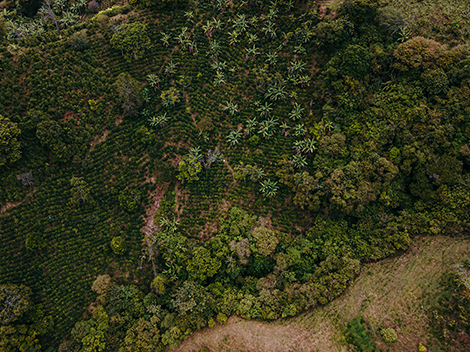
Even though it’s been 4,000 years, the soil resulting from the last major eruption of Tolima is still considered “young soil,” filled with nutrients that are no longer found at the same levels in old soil. There is a long list of elements on offer in volcanic soil that are fading or absent in other soils, such as high levels of potassium and nitrogen. Also present is something called “Boron,” which arrived from outer space a long time ago, and is important to cell walls, the creation of enzymes, and the production of flowers and fruit, meaning Boron contributes to yield. Beyond the nutrients, the structure of volcanic soil is also beneficial to coffee growing. It can soak up and hold moisture while, at the same time, facilitate good drainage so water doesn’t pool, which is not good for coffee plant roots. Coffee plants like to take a drink, then take a break. Also, volcanic soils are usually found on an incline, which also helps with drainage.
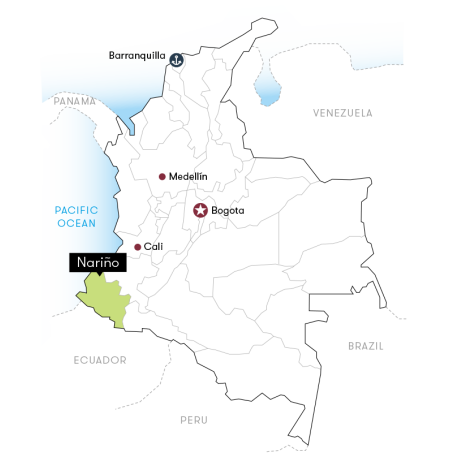
- Region Narino
- Farm Name Various producers
- Producer Type Small Holder Farmers
- Processing Washed
- Processing Description 12-30hr fermentation, assorted drying methods
- Bag Type Grain Pro / Ecotact
- Plant Species Arabica
- Variety Castillo, Caturra, Colombia
- Min Growing Altitude 1400m
- Max Growing Altitude 2000m
- On Sale No
- Top Lot Yes
- Status Spot
- Coffee Grade COL CA WA EXCO EP10
- CTRM Contract Number P614079-2
- Country of Origin Colombia
- Warehouse The Annex CA